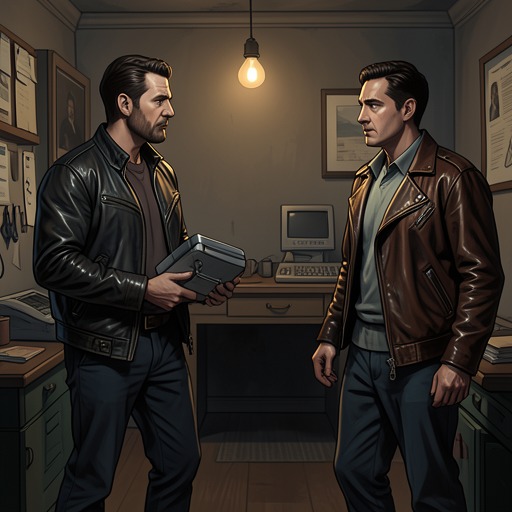
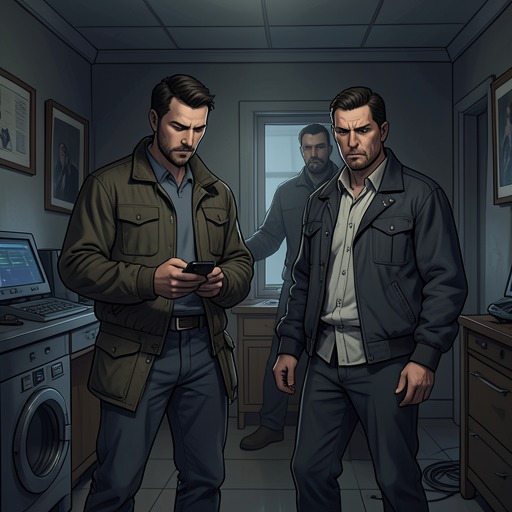
Patrick turns Tee-J in to the guards
Dark Lies the IslandPatrick turns Tee-J in to the guards not to punish him, but because he fears that his younger brother’s recklessness will end in death. The choice places Patrick’s idea of protection in painful conflict with Tee-J’s anger and independence, and its consequences unfold against the brothers’ continuing insecurity.
Background and Decision
At thirty-six, Patrick is planning to collect Tee-J after the younger man completes a six-month sentence in juvenile detention. Tee-J had stolen a guard’s wife’s Isuzu Trooper and driven it across three counties, with the guard pursuing him until the guard’s car left the road. The chase ended with Tee-J on the vehicle’s bonnet in Strandhill, looking out to sea. His exploit has become a legend in Patrick’s telling, but its danger has changed how Patrick sees it.
Patrick believes Tee-J has a dangerous look about him and fears that, without the protection of custody, he may end up dead. He therefore identifies his own brother to the guards. The decision is a reversal of the anticipated reunion: rather than helping Tee-J leave detention, Patrick has helped put him there. He sees the act as necessary for Tee-J’s safety, even as he recognizes its emotional cost.
The Reunion at the Detention Unit
When Patrick arrives at the juvenile detention unit, Tee-J is in reception with a staff supervisor. He will not meet Patrick’s eyes. Instead, he tells the supervisor that Patrick can go away. The rejection makes clear that Tee-J understands Patrick’s role in his detention and does not accept the decision as an act of care.
Patrick tries to explain that he acted for Tee-J’s own good. The supervisor, dressed in a baby-blue polo shirt, attempts to bring the brothers together, but the encounter does not resolve their conflict. Patrick’s account frames the scene with cinematic irony: turning in his brother felt so much like a film that he could almost hear its soundtrack. The dramatic image contrasts with the blunt reality of Tee-J’s refusal to reconcile.
Consequences and Significance
The decision offers no broader rescue from the brothers’ circumstances. Patrick is trying to recover the White Hitachi van, has only 270 euros and change against a minimum release fee of 300 euros, and is carrying other legal and financial risks. The wire cutters left in the van could expose him to another stretch in Castlerea jail; he also fears trouble over stolen DVDs and crystal meth. He and Tee-J remain without a roof over their heads, while Patrick worries about his health and Tee-J’s tendency to get into trouble.
Against these pressures, Patrick’s choice is a limited act of responsibility: he uses the institutions that have confined Tee-J as a safeguard against the danger he sees in the alternative. Yet the result is not reconciliation or security. Tee-J resents him, and Patrick’s own problems remain unresolved. The episode makes protection inseparable from betrayal in the brothers’ relationship: Patrick acts to keep Tee-J alive, but the act costs him his brother’s trust and does not free either man from precariousness.